Clark Diamonds: HubSpot CMS and a Laravel app, talking to each other.
Clark Diamonds wanted to sell diamonds online to the trade. They had a custom Laravel app doing live stock search and 3D stone imagery, and a WordPress site that couldn't keep up with either. We moved the site to HubSpot CMS and wired the two together over the API.
Clark Diamonds supply diamonds to the trade. Their customers search live stock, filter on the things a buyer actually cares about, and look at high-resolution 3D rotating images of individual stones, all through a custom-built ecommerce app.
The app was good. The WordPress site sitting in front of it was the problem.
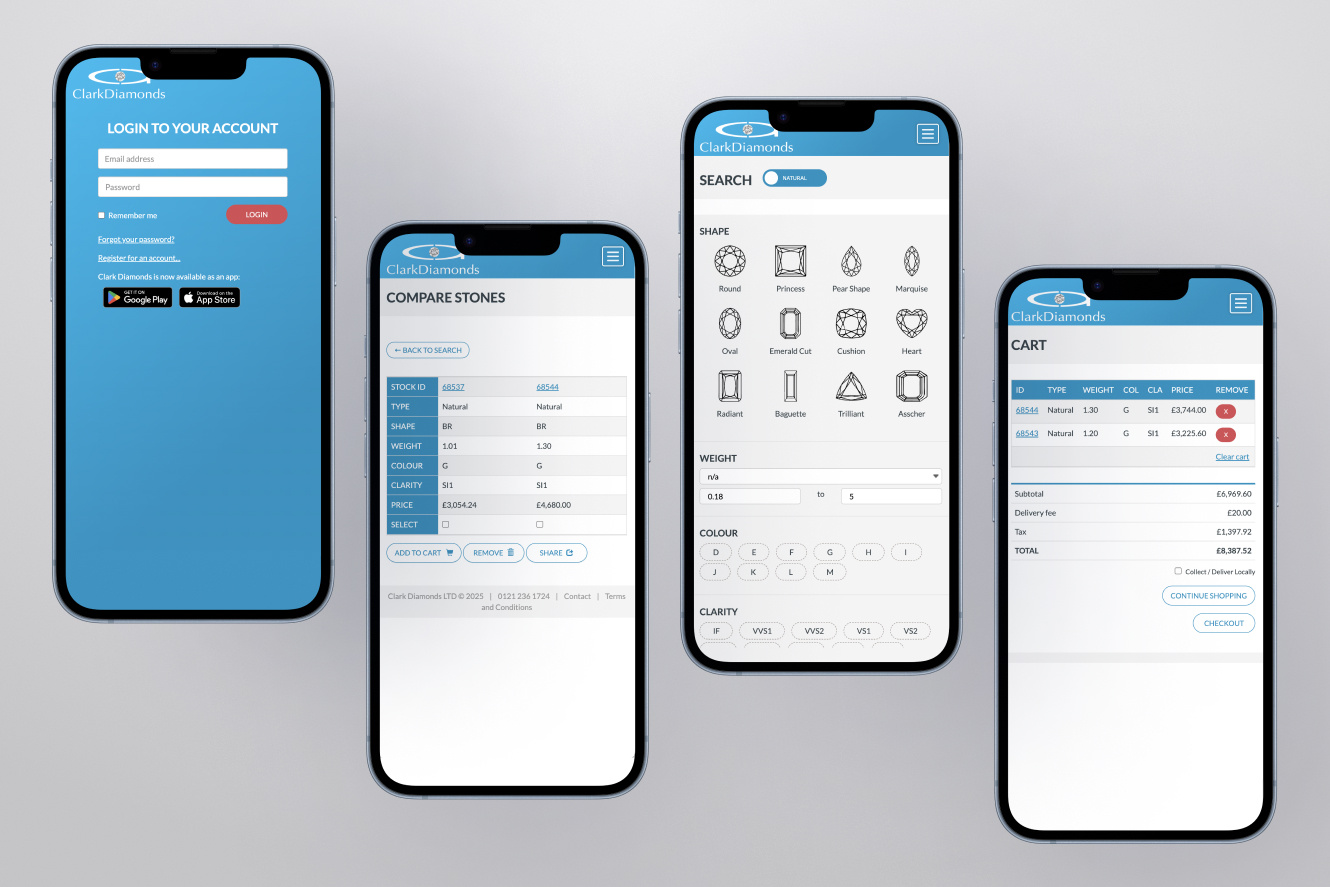
Clark Diamonds had outgrown WordPress. Updates were slow, the experience was poor, and the site barely spoke to the Laravel app behind it.
Customers struggled to find key information, or to trial the app at all. That showed up where it always shows up, in engagement and in conversion.
Selling diamonds online meant they needed live stock, orders that processed themselves, and data moving between two systems without anybody exporting a file.
We migrated the website to HubSpot CMS and built a real-time API connection between HubSpot and the Laravel system.
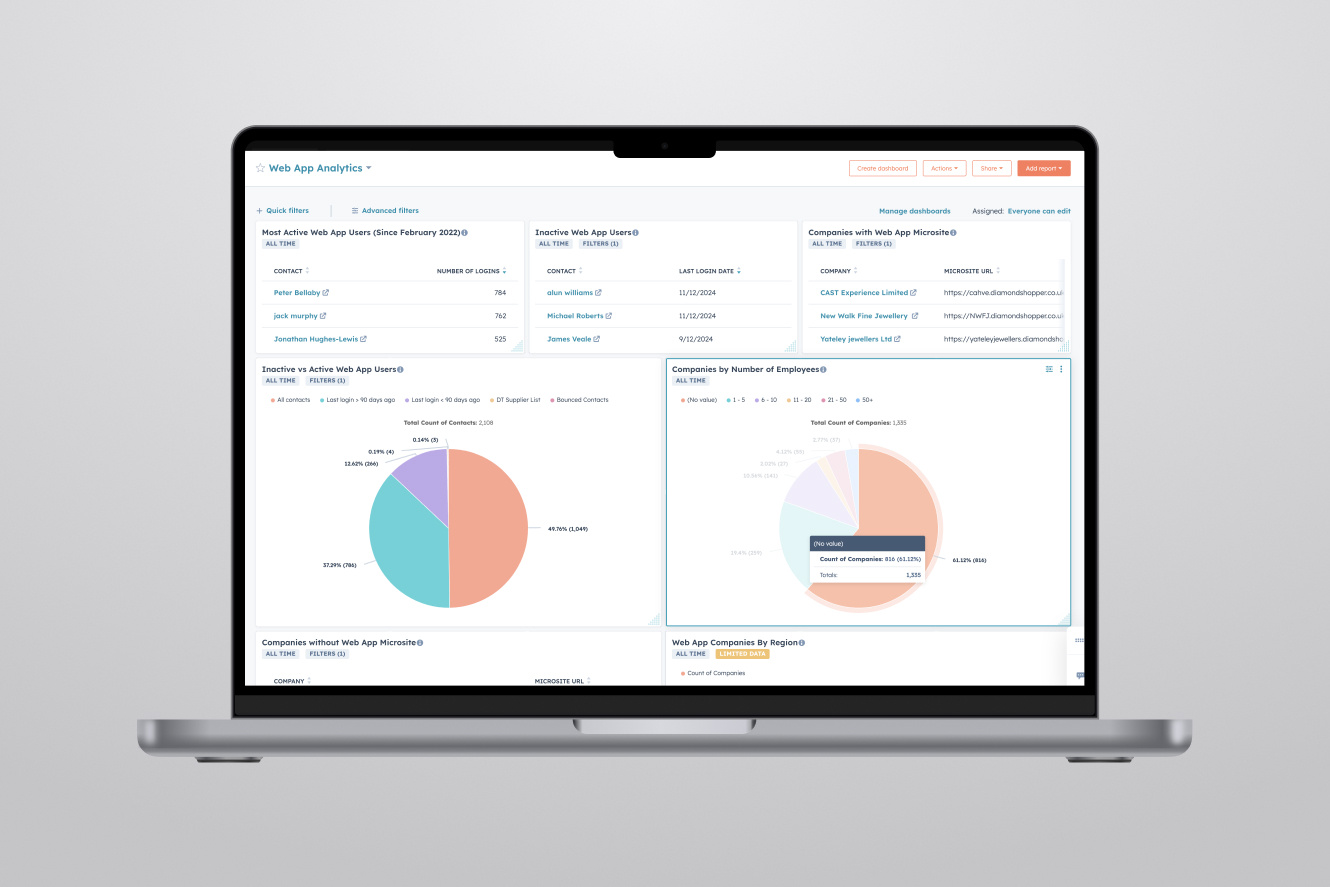
Orders, customer records and business metrics update on their own. Nobody moves data between platforms by hand any more. Sales and marketing read current information rather than last week's.
And improvements to the site ship without waiting on a WordPress plugin to be compatible first.
We built the app that drives the ecommerce side. The core of it:
- Bespoke PHP core on Laravel 8
- Digital Ocean VPS, Ubuntu and PHP 7, with weekly snapshot backups
- Separate production and staging environments
- MySQL for primary storage
- Bitbucket for version control
- An FTP Dropbox integration pulling hourly diamond stock updates from DiamondTrack
The HubSpot side
Data moves both ways.
Stock
CSV files arriving over FTP get processed automatically, and stock availability reflects across every platform.
Customers and companies
A new account registration creates or updates HubSpot Contacts and Companies over the API, and changes flow back the other way, so neither system holds a stale version of a customer.
Orders
New orders write a record into a HubDB Orders table and link the purchase to the HubSpot contact, which gives marketing follow-up something real to work from.
Business intelligence
KPIs sync into a HubDB table every 30 minutes. Top companies by month, lab-grown against natural, and whatever else they decide is worth watching.
“Phill and the team have helped our company move into new markets, and develop how we work with existing customers by creating a digital presence which is continually evolving to meet the needs of our customers.”